
SpaceX Goes Public
What Reprices Next?

Greene Financial Advisory Brief
The rocket is the symbol. The system behind it is the story.
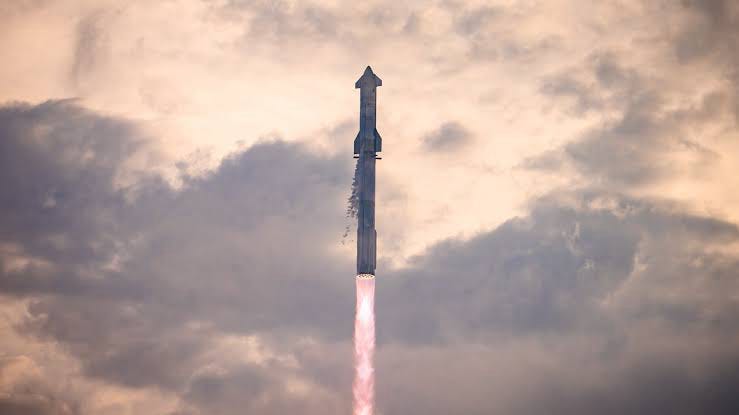
The Great Space Exploration Age -
Part 3
The IPO is the headline. The supply chain may be the opportunity.
Every industrial age eventually gets its market signal.
Railroads had theirs. Aviation had theirs. The internet had several. Artificial intelligence had Nvidia.
Space may be approaching one now.
SpaceX is expected to debut on Nasdaq on Friday, June 12, 2026, under the ticker SPCX, in what may become one of the largest and most important public listings in market history. The reported structure calls for a fixed price of $135 per share, adjusted for a recent 5-for-1 split, with roughly 555.6 million shares offered to raise approximately $75 billion. That would place the company's valuation near $1.75 trillion.
The numbers are extraordinary, but the more important point is not size alone. SpaceX is not arriving as a conventional aerospace company. It is coming to market as the company that changed launch economics, built Starlink into a global satellite-broadband platform, advanced Starship as a heavy-lift architecture, and forced investors to think about space as something larger than exploration.
It is becoming an industrial category.
For years, public investors have had to think around SpaceX. The company has been the center of gravity in the modern space economy, but not the public measuring stick. Investors could buy suppliers, competitors, satellite companies, defense contractors, and speculative space names. What they could not do was value the apex company directly.
That changes once SpaceX trades.
Public markets create comparisons. Launch providers get compared. Satellite communications companies get compared. Lunar operators, defense contractors, RF suppliers, antenna makers, power-system providers, advanced manufacturers, and orbital infrastructure companies all get pulled onto the same valuation map.
The obvious question is whether SpaceX itself is worth $1.75 trillion. The better question is what a $1.75 trillion benchmark does to everything around it.
SpaceX is the benchmark. The constraint stack is the trade.
Why the Mechanics Matter
This offering would not merely absorb capital. It would redirect attention.
A $75 billion raise is large enough to force institutional investors to decide where space belongs: technology, industrials, defense, communications, infrastructure, or growth. The expected retail allocation, reportedly up to 30% of the float, adds another layer. This may become one of those rare events where institutional demand, retail enthusiasm, and benchmark creation all meet in the same narrow window.
Markets are not immune to symbols. Tesla did not remain only a car company in the public imagination. Nvidia did not remain only a chip supplier. When a dominant company becomes the public benchmark for an emerging industrial branch, investors begin repricing the ecosystem around it.
That does not mean every company attached to the theme deserves a premium. Most will not.
The discipline is to separate sympathy trades from companies that sit inside real constraints.
From Space Story to Space Infrastructure
The earlier pieces in this series argued that space is no longer only a frontier of exploration. It is becoming a layer of industrial, commercial, and geopolitical infrastructure.
That distinction matters.
The first phase of the modern space economy was about proving that reusable rockets could change the cost structure of reaching orbit. The next phase is about what repeated launch makes possible: satellite networks, defense systems, lunar operations, orbital communications, data movement, power systems, robotics, sensors, and mission hardware.
Launch cadence is the foundation. Infrastructure is the business.
The World Economic Forum and McKinsey have estimated the global space economy at roughly $630 billion in 2023, with a projected path toward $1.8 trillion by 2035. Forecasts are never destiny, but they help explain why capital is beginning to treat space less like an isolated government project and more like an industrial market.
SpaceX going public may accelerate that shift by giving investors the benchmark they were missing.
The Network Is the Business
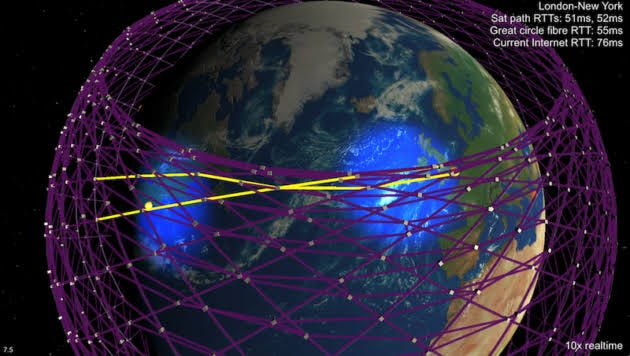
The value is not only in reaching orbit. The value is in making orbit useful.
That is where the SpaceX IPO becomes more than a rocket story. It becomes a communications story, a defense story, an industrial story, and possibly an AI-infrastructure story. A Starlink-only spinoff would have been easier to analyze. Investors could focus on subscribers, terminals, broadband pricing, margins, and telecom comparisons.
A total SpaceX package is different. The market now has to value the whole machine: launch capacity, reusable rockets, Starship, Starlink, satellite manufacturing, defense applications, orbital logistics, AI and data infrastructure, and the supplier base underneath it.
That is harder to analyze. It is also more important.
The Constraint Stack
The wrong question is which company becomes the next SpaceX. There may not be another SpaceX.
The better question is what SpaceX makes necessary.
If launch cadence rises, the system needs launch redundancy. If Starlink continues scaling, the system needs antennas, terminals, RF components, chips, power systems, ground infrastructure, and manufacturing capacity. If Starship changes payload economics, the system needs advanced materials, propulsion components, testing systems, robotics, and deeper industrial capacity. If space becomes a more important defense layer, governments need resilience, surveillance, communications, redundancy, and operational control above the map.
That is the constraint stack.
A rising tide may lift many boats at first. That is usually what happens when a dominant benchmark enters the public market and capital begins searching for adjacent exposure. Over time, however, markets separate sympathy trades from durable businesses.
The point is not to own every space-related stock. The point is to identify which companies sit inside real constraints.
In emerging industrial branches, high alpha often appears where the market has not fully priced the bottleneck. The company does not have to be the headline name. It has to occupy a place where the system cannot scale without additional capacity.
That is how I am approaching this event.
The public thesis is the benchmark effect: SpaceX may force markets to treat space as an investable industrial category, not just a frontier story.
For paid subscribers, I move from thesis to portfolio judgment - what I own, what I am watching, and how I am thinking about risk, timing, and position discipline.
Paid Subscriber Section
