
The Next Device
AI, the end of apps, and the interface after the smartphone

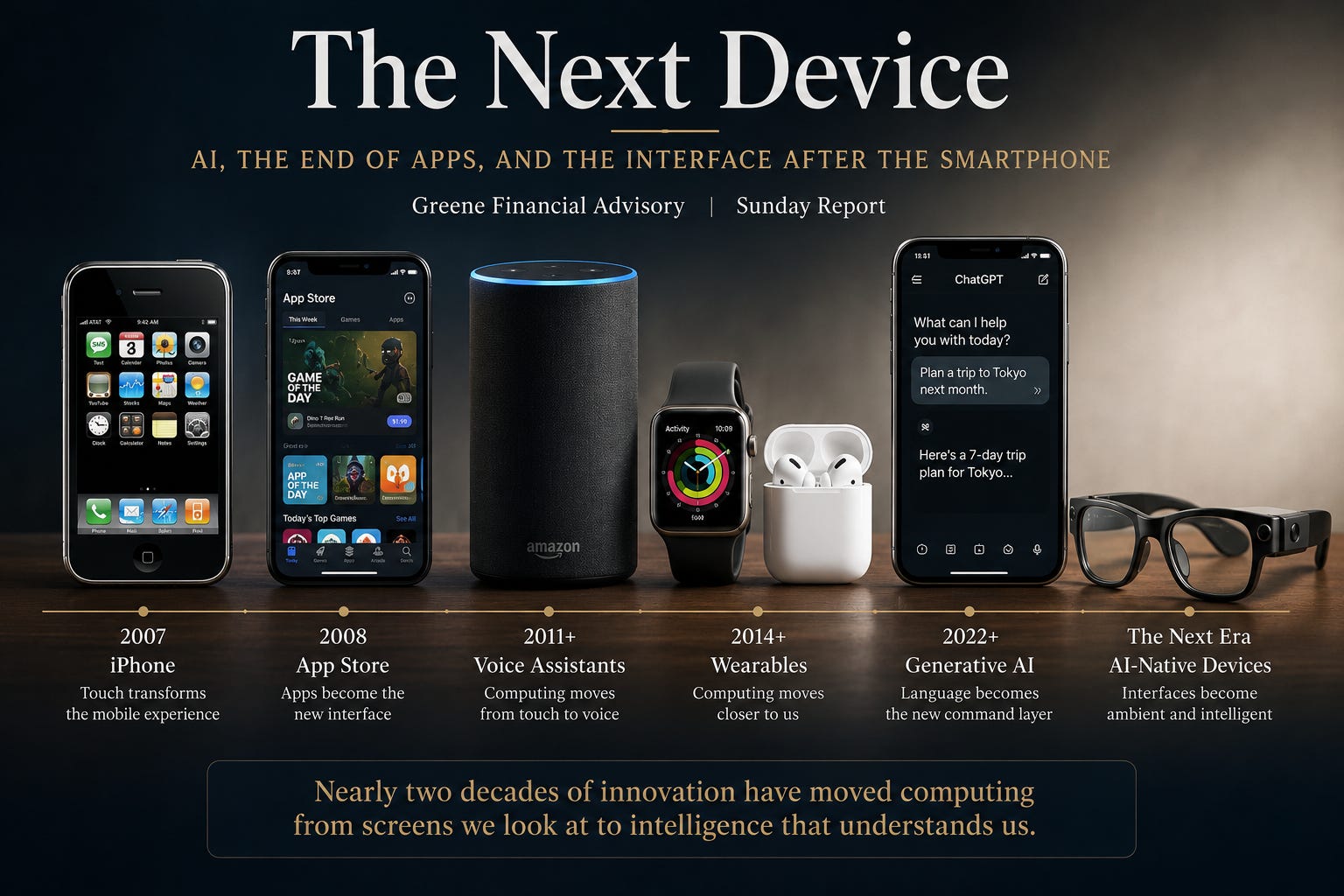
Greene Financial Advisory
The Sunday Report - Editorial briefings on markets, technology, history, regions, and the future world taking shape.
Sunday Tech Briefing
The smartphone transformed modern life, but every dominant interface eventually faces the question of what comes next.
That does not mean the phone is going away.
The more interesting question is whether the smartphone is beginning to lose its monopoly over the way humans interact with software.
For almost twenty years, the phone has been the central remote control of modern life. It absorbed the camera, the wallet, the map, the newspaper, the trading screen, the music player, the calendar, the bank branch, the television, and the address book. Then the App Store organized all of that activity into icons.
That was the great genius of the smartphone era. It did not merely make computing mobile. It made computing behavioral.
We learned to live through the app grid. We tapped, searched, scrolled, authenticated, and moved from one silo to another to complete what, in human terms, was usually a single intention: book the trip, pay the bill, find the restaurant, check the market, message the client, move the money, confirm the reservation.
The phone became the operating layer of daily life.
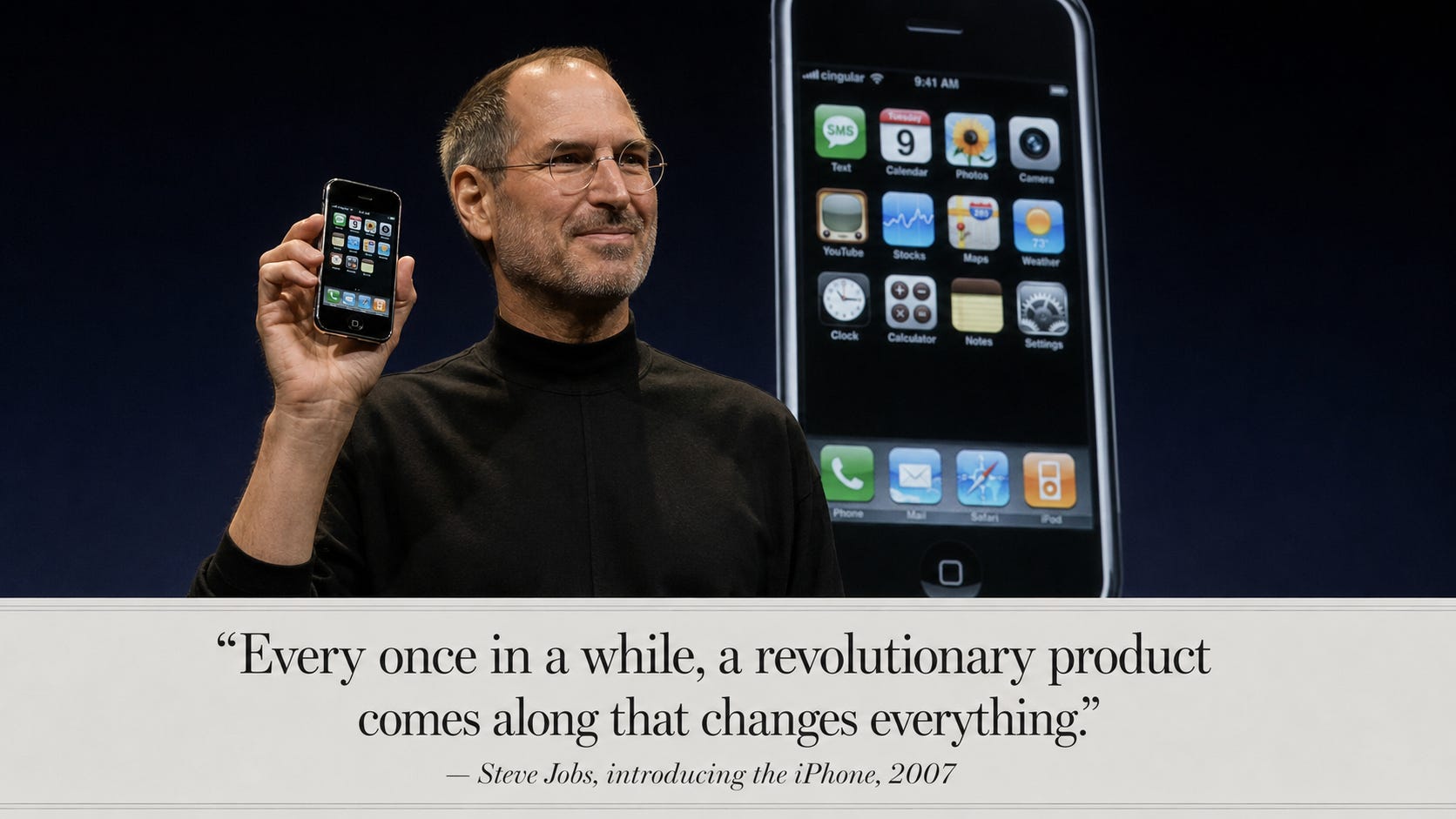
Jobs understood that the iPhone was not merely a new device. It was a new interface between people and software.
Its importance was not that it combined a phone, an iPod, and an internet communicator into one product. Its importance was that it changed the relationship between human beings and the digital world.
Before the smartphone, computing was something many people sat down to use. After the smartphone, computing became something people carried continuously. The device compressed communication, identity, navigation, media, commerce, work, and personal memory into one object.
The App Store completed the shift. The app became the basic container of modern digital behavior. If you wanted to do something, you opened the app that owned that function.
That model built enormous companies. It also trained an entire generation of users to organize life around software silos.
But technology platforms rarely end in a clean replacement cycle. The personal computer did not eliminate the mainframe. The smartphone did not eliminate the personal computer. Often, the older layer remains useful while the focal point of innovation shifts elsewhere.
That is the possibility now emerging around artificial intelligence.
The next device may not replace the phone. It may begin to abstract it.
The smartphone may remain the processor, identity anchor, and backup screen. But the human interface may slowly move toward voice, vision, memory, context, and agents.
This shift did not begin with ChatGPT. The research trail is longer than that.
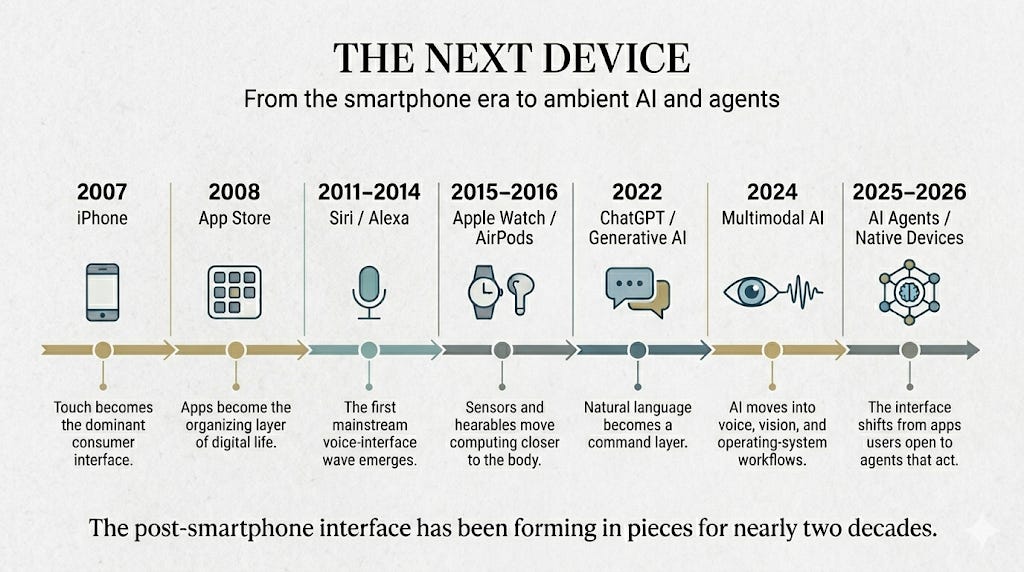
The iPhone established touch as the dominant consumer interface in 2007. The App Store, introduced the following year, turned the phone into a platform and made the app the organizing layer of digital life. A few years later, Siri, Alexa, and Google Assistant hinted at a different model: computing that could be summoned by voice rather than opened through a screen.
But the first voice wave was limited. It could answer simple questions, play music, set timers, and control a few connected devices. It did not truly understand context. It did not remember enough. It could not reason across a workflow. It was ambient in form, but not yet intelligent enough in function.
Then came the wearable satellites.
The Apple Watch put sensors on the wrist. AirPods moved computing closer to the ear. Smart speakers placed voice into the room. Meta’s Ray-Ban glasses offered a more subtle version of wearable computing than earlier smart-glasses attempts. Each of these products pointed in the same direction: the interface wanted to move away from the glowing rectangle and closer to the body.
The hardware kept circling the idea.
The software was not ready.
That is why the generative AI moment matters.
ChatGPT did not simply introduce another application. It showed that natural language could become a command layer. A user could state an intention rather than navigate a menu. The machine could respond in context, revise its answer, remember parts of the conversation, and increasingly interact across different modes of information.
The next step is the agent.
An app is a destination. An agent is a delegate.
That difference matters.
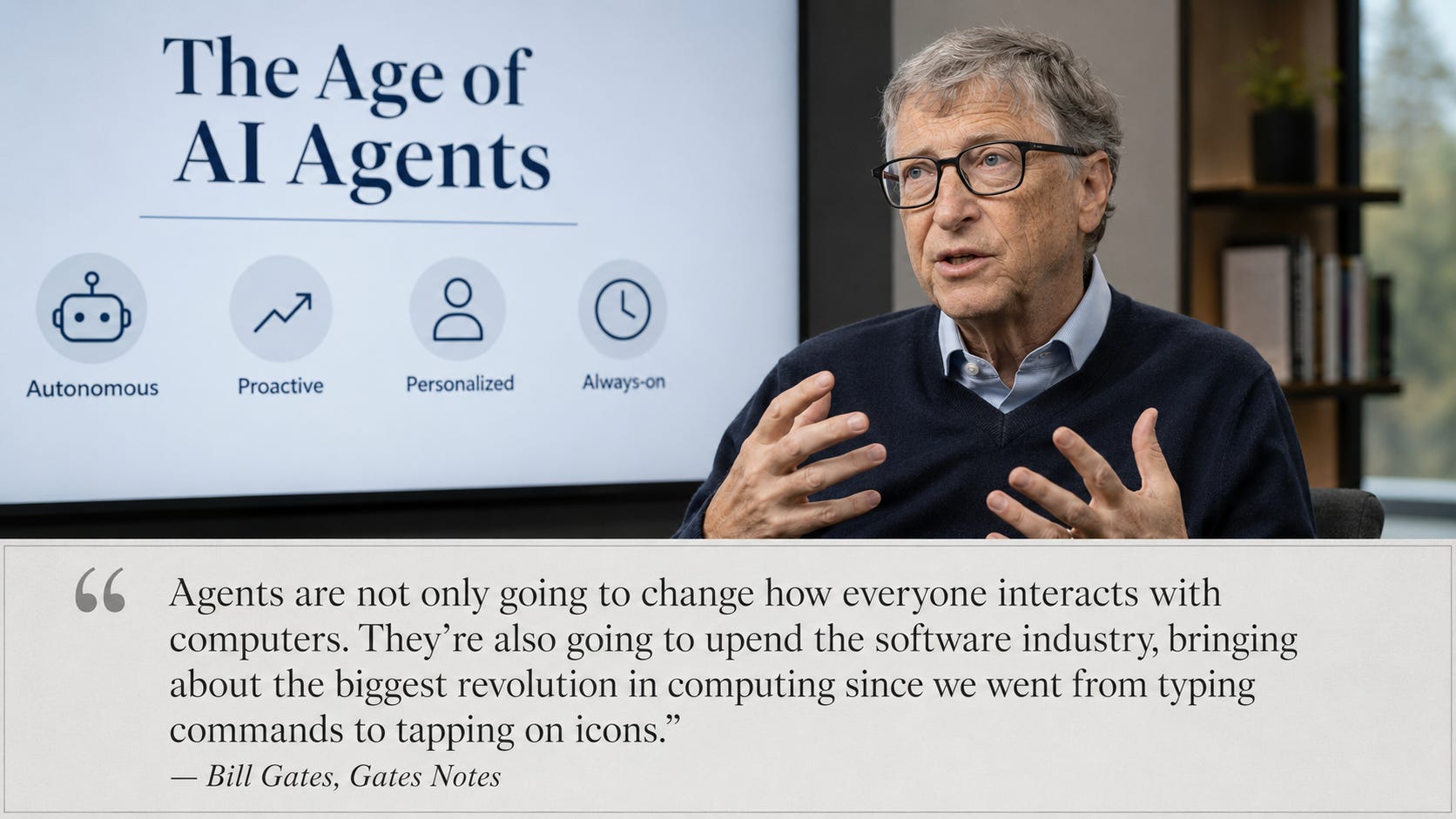
In the app era, the user coordinates the workflow. To plan a trip, a person may open an airline app, a hotel app, a calendar app, a map app, a rideshare app, a restaurant app, a payment app, and perhaps a messaging app. The user is the system integrator.
In the agent era, the user states the objective. The AI attempts to coordinate the workflow across services.
That is the core of the matter. If agents become capable enough, the user may no longer begin every task by choosing an app. Search may become less about links and more about answers or actions. App stores may become less central if agents interact through services, APIs, and background workflows. Advertising may change if fewer users browse pages directly. Hardware may shift toward earbuds, glasses, watches, microphones, cameras, and edge-AI chips.
This is where the story moves beyond consumer technology.
A post-smartphone interface would demand far more than clever product design.
Real-time voice needs low latency. Vision requires cameras, sensors, and constant interpretation. Personal context depends on memory, identity, and permissions. Privacy may push more processing onto the device itself, which means better edge chips. And if agents are acting continuously on behalf of users, the demand for inference, power, cooling, and data-center capacity rises with it.
In other words, the next device may be small in the hand — or barely visible at all — but the system behind it will be enormous.
This is why the phrase “the end of apps” should be treated carefully. Apps are unlikely to vanish. They remain useful containers for software, identity, payments, content, and services. But their role could change.
The app may become less of a place the user visits and more of a service an agent calls.
That is a major economic difference.
If the consumer no longer begins with the app icon, then the gatekeeper changes. The platform that understands the user’s intent, context, permissions, and identity may gain enormous leverage.
That could be Apple. It could be Google. It could be OpenAI. It could be Meta. It could be Microsoft. It could also be some combination of operating systems, cloud providers, device makers, and AI model companies competing to own the most valuable layer in computing: the point where human intention becomes machine action.
The smartphone era was organized around attention.
The agent era may be organized around delegation.
That sounds subtle. It is not.
Attention-based platforms compete to keep the user engaged. Delegation-based platforms compete to act correctly on the user’s behalf. That requires a different kind of trust. A social media feed can be annoying and still profitable. An AI agent that books the wrong flight, sends the wrong message, moves money incorrectly, exposes private data, or misunderstands a professional task creates a much higher level of risk.
This is why the next device will not be judged only by design. It will be judged by confidence.
Can it understand the user? Can it remember without becoming intrusive? Can it act without overstepping? Can it protect identity? Can it reduce friction without creating dependence? Can it make life simpler rather than merely adding another device to manage?
Those are not minor product questions. They are the questions that determine whether a new interface becomes a category.
The OpenAI and Jony Ive effort belongs in that context.
Its importance is not that any single device is guaranteed to succeed. Most new hardware categories fail, and even successful ones usually arrive after several false starts. The importance is symbolic and strategic: one of the defining design figures of the smartphone era is now working with one of the defining software companies of the generative AI era on what may become an AI-native device.
That does not make the outcome certain.
It makes the question serious.
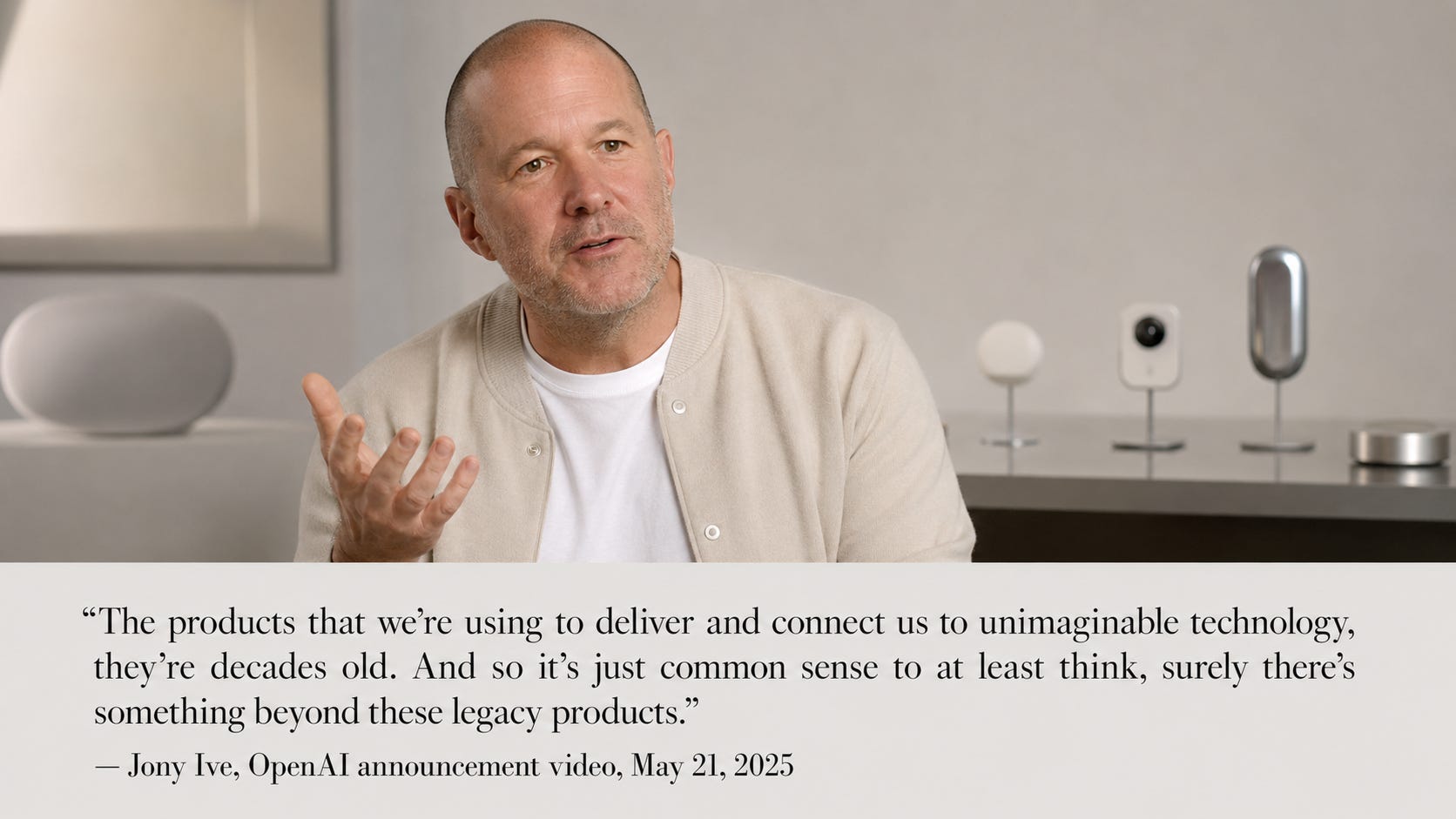
That is the serious version of the next-device argument.
It is not that the smartphone suddenly becomes obsolete. It is that the phone was designed for an earlier software era — an era of icons, screens, taps, and app silos.
AI changes the question. If software can understand language, context, vision, memory, and intent, then the interface does not necessarily have to remain trapped inside the same rectangular screen.
The smartphone succeeded because it solved many problems at once. It combined mobility, identity, communication, media, navigation, payments, and software distribution into a single object. It became indispensable because it compressed complexity.
The next device, if it emerges, will need to do something similar. It will need to make AI feel less like a chatbot and more like an operating layer. That is a much harder problem than launching another screen.
It is also why the opportunity is so large.
The smartphone brought computing into the hand. AI may move computing into the conversation, the ear, the eye, the room, and the surrounding environment.
The device after the smartphone may not begin by replacing the phone. It may begin by making the phone feel less like the place where digital life happens — and more like the machine quietly supporting what happens elsewhere.
The next device may not be defined by the screen. It may be defined by the moment human intent becomes machine execution.
Source Credits: Apple iPhone and App Store history; Apple Siri; Amazon Echo and Alexa; Apple Watch; AirPods; Meta Ray-Ban smart glasses; OpenAI ChatGPT and GPT-4o; Google Gemini Live; Apple Intelligence; Reuters reporting on OpenAI, Jony Ive, LoveFrom/io, and AI-native device development; Gates Notes on AI agents; academic and industry research on agentic AI and the emerging Agentic Web.
— Eric Greene / Founder, Greene Financial Advisory / Founder & Chief Architect, TCE12 Corridor Initiative
For paid readers, I’ll return to the investment implications of the agent era — chips, edge compute, power demand, inference infrastructure, and the companies positioned around the next interface layer — in a future Builders Circle note.